THE FIELD OF

Youth System Stability Architecture

Designing Stable Conditions Across Youth, Public Safety, and Community Systems

Youth System Stability Architecture is the study and design of the human, relational, environmental, and institutional conditions that determine whether youth systems function as stable, coordinated environments—or fragment into reactive cycles of intervention, enforcement, and recidivism.

“Youth outcomes are not isolated events. They are produced by the systems surrounding young people. “

Youth violence is not a behavior problem. It is a "system stability problem".

Why Youth Systems Continue to Fail

This is not a failure of effort. It is a failure of system alignment.
Across cities, the same pattern persists:

Youth violence is not random—it is the predictable outcome of unstable systems.

These outcomes are not unpredictable. They are produced.

A System-Level Understanding of Youth Outcomes

Youth do not experience systems separately.
They experience:
Behavior is not the starting point. It is the output of system conditions.
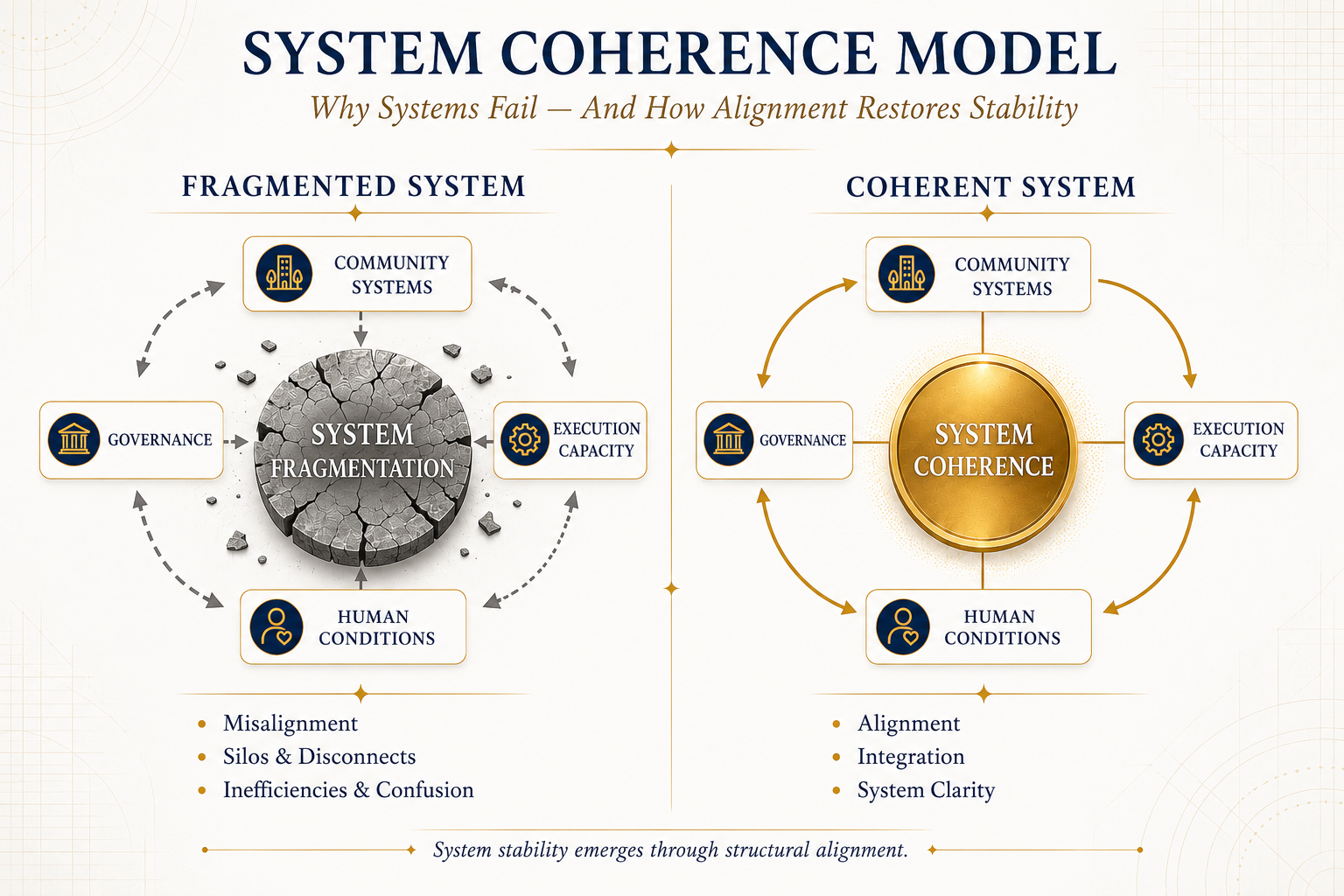
Youth System Stability Architecture Model
A structural model illustrating how youth outcomes emerge from the alignment of community conditions, governance systems, execution capacity, and human conditions.

What Is Youth System Stability Architecture?

YSSA establishes a system-level approach to understanding and preventing youth instability. It defines youth systems as layered human systems shaped by interactions across:
Systems do not fail independently. They fail together.

Foundational Principles of the Field

01

Youth Behavior Is Environmentally Regulated

Behavior emerges from conditions—not isolated decisions
02

System Stability Precedes Behavior Stability

Stable systems produce stable outcomes
03

Public Safety Systems Are Human Systems

They function through relationships, conditions, and pressures
04

Governance Shapes Outcomes Upstream

Policy and structure determine system behavior
05

Fragmentation Produces Escalation

Disconnected systems increase risk
06

System Coherence Reduces Violence

Alignment enables early intervention and stability
07

Prevention Requires System Design

Prevention is not a program—it is a system outcome

From Conditions to Recidivism

Instability does not originate in a single system.
It moves across systems.
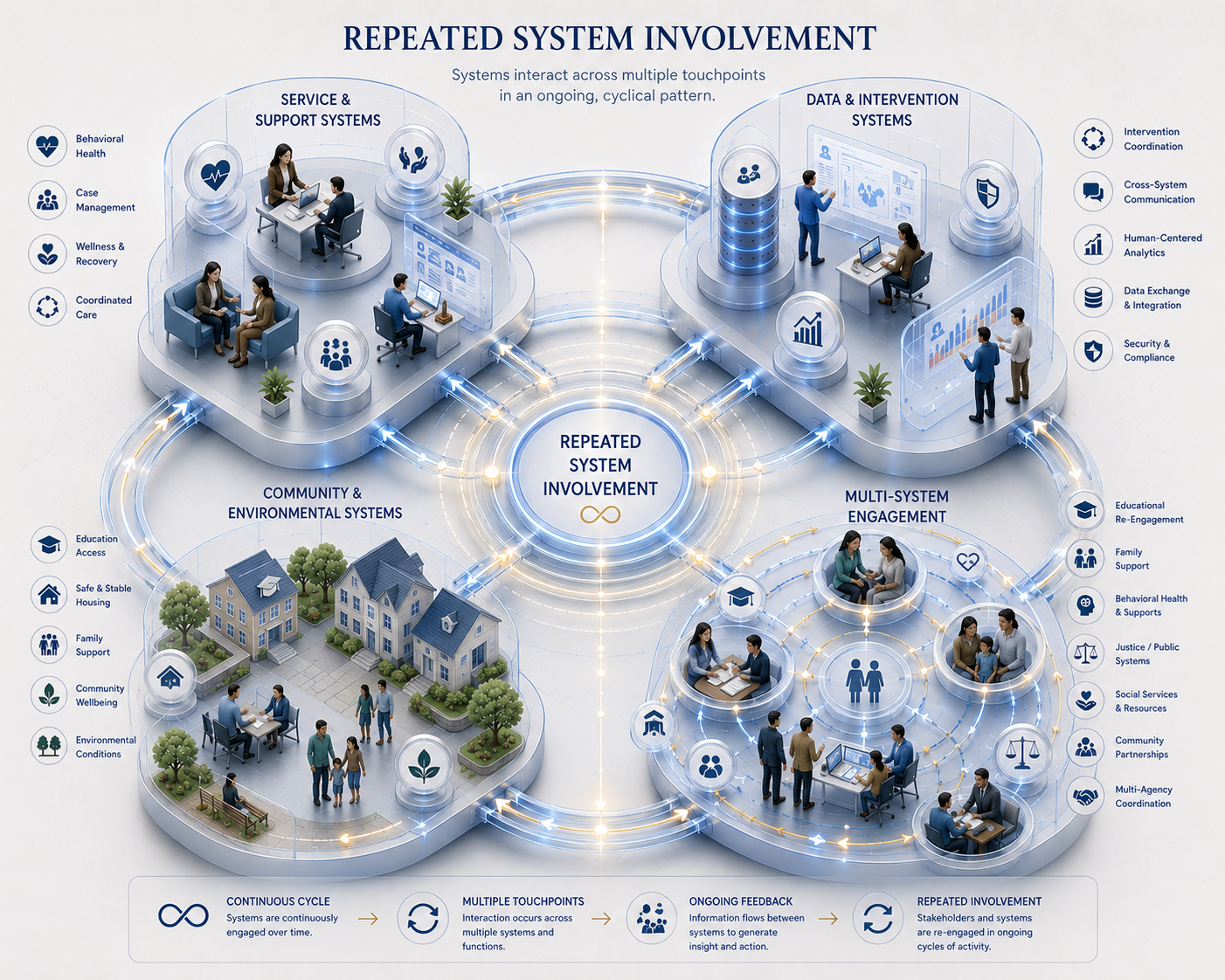
Recidivism is not a behavioral issue. It is a system design outcome. These conditions do not operate independently—they interact across systems.
Youth Justice Flow Model

The Architecture of Youth Systems

Community Conditions
0 0
Governance Structures
0 0
Execution Capacity
0 0
Human Conditions
0 0
Behavior & Outcomes
0 0

Measuring System Stability

Coherence Index
Traditional systems measure outcomes. This field measures the system itself. The Coherence Index provides a structured way to assess:
“This is not a performance metric. It is a system diagnostic instrument. These frameworks operate together to define, measure, and stabilize system conditions across youth-serving systems.”
Coherence Index Model

From Framework to Real-World Systems

Youth System Stability Architecture is designed for real-world application.
01

System Diagnostics

Identify instability across systems
02

Risk Identification

Detect high-risk environments and youth
03

Intervention Design

Target support where instability is highest
04

Cross-Agency Coordination

Align police, schools, and justice systems
05

Reentry Stabilization

Design stable transitions back into community

Process Model

Detect
0 0
Diagnose
0 0
Identify
0 0
Target
0 0
Monitor
0 0
Adjust
0 0

A New Model for Public Safety

Public safety improves when systems stabilize—not when responses increase.
Before
01

Reactive
enforcement

02

Fragmented
systems

03

Repeated
system involvement

After
01

Aligned
systems

02

Targeted
intervention

03

Reduced
recidivism

04

Early
stabilization

This work is not:
“It is a structured body of knowledge for designing human systems. “

A New Discipline in Human Systems Architecture

Youth System Stability Architecture is a subdomain of:
Human Systems Architecture

This is how systems are stabilized. This is how outcomes change.

Youth systems do not fail because young people make poor decisions. They fail when the conditions surrounding those decisions are unstable.
Systems produce what they are designed to produce. If outcomes are unstable, the system must be redesigned.