Human Conditions Theory
Defines how behavior is produced by conditions
A foundational framework establishing that behavior is regulated by environmental, relational, and systemic conditions—not isolated decision-making. This framework explains how stability, regulation, and performance emerge from the conditions surrounding individuals within systems.
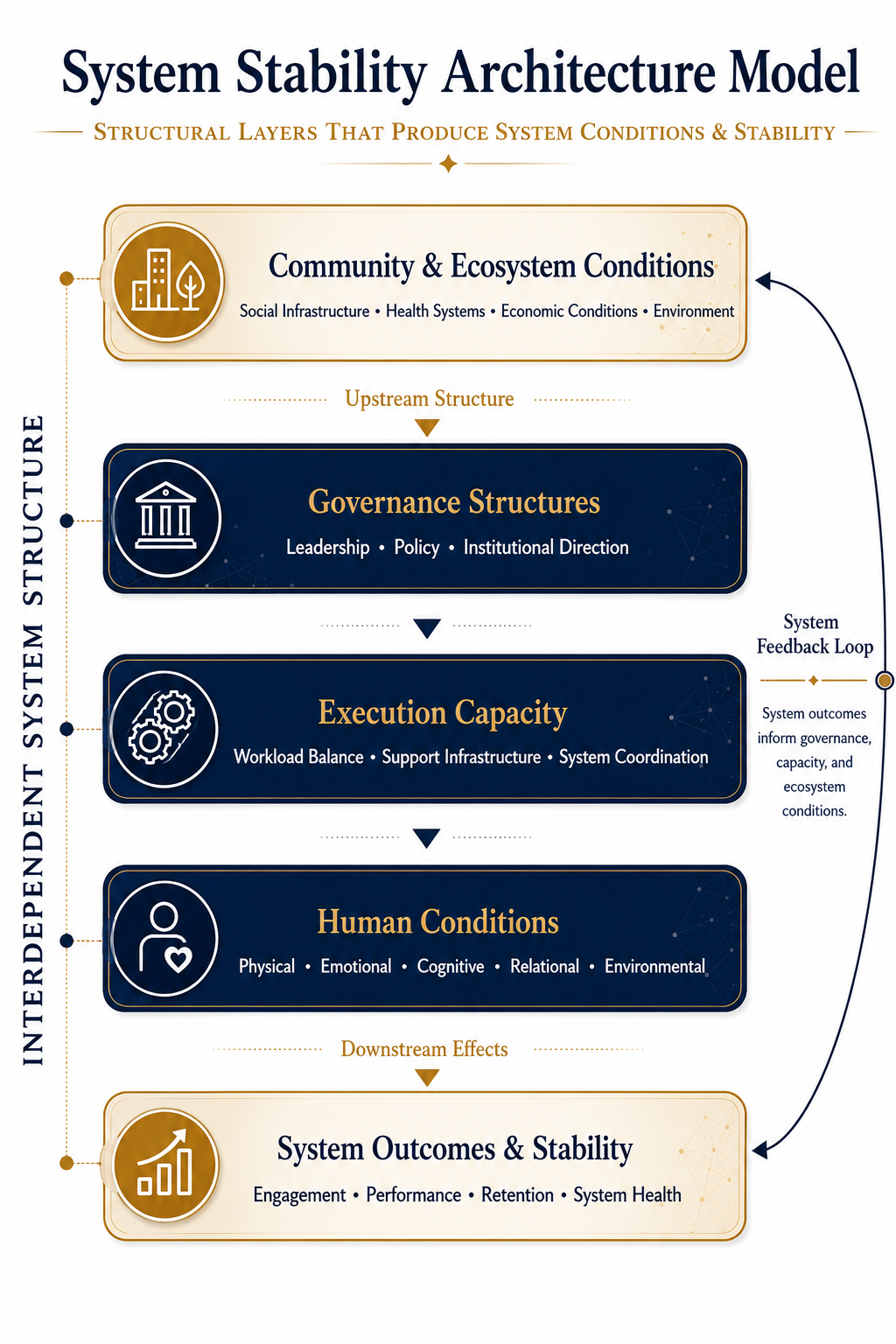
Distributed Conditions Model
Explains how conditions operate across systems
A systems model demonstrating how conditions are distributed across interconnected systems and interact to produce outcomes. This framework explains why isolated interventions fail and how alignment across systems produces stability.
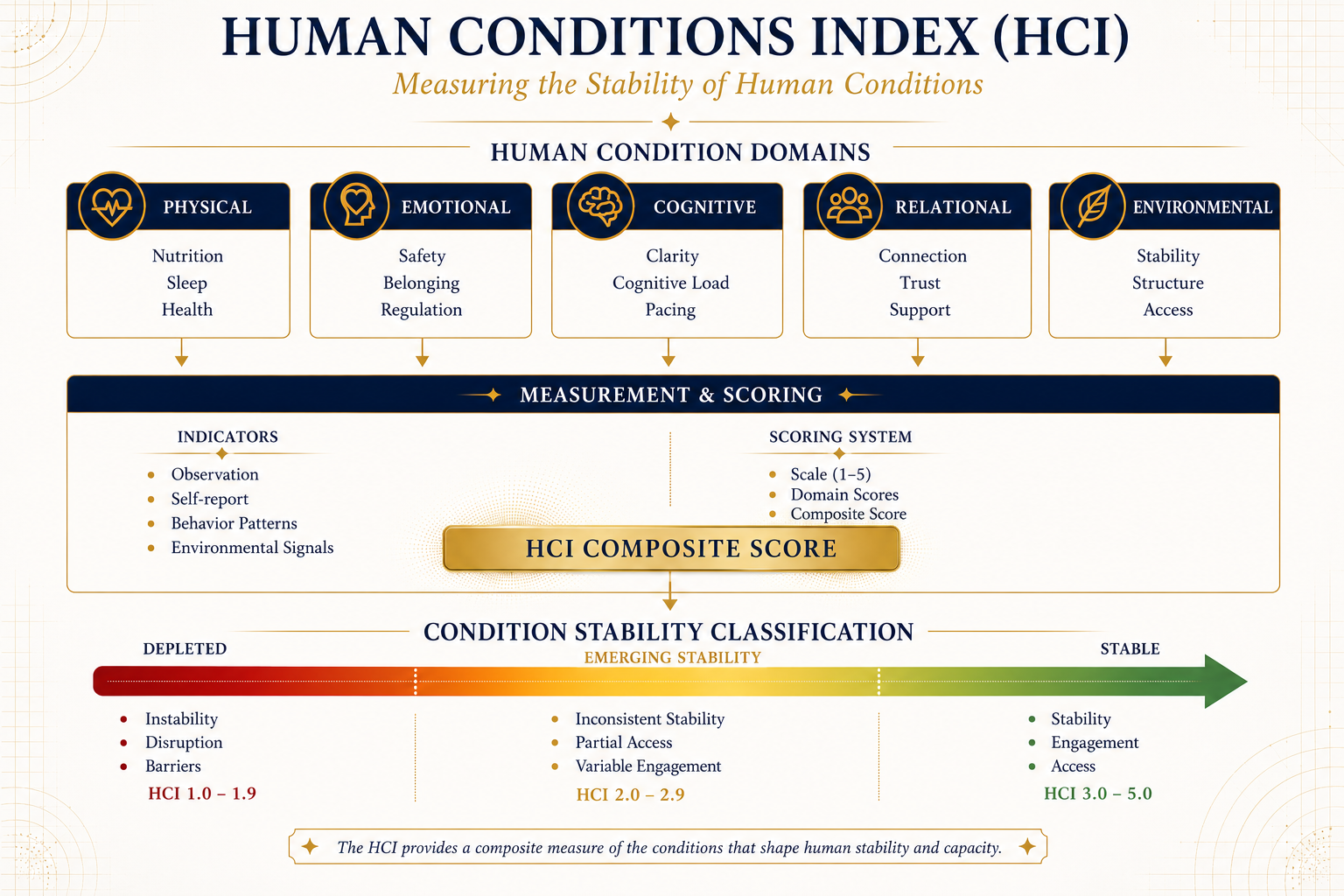
Human Conditions Index
Measures the stability of system conditions
A structured measurement framework used to assess the stability of environments influencing behavior and performance. This model enables early identification of instability before outcomes deteriorate.
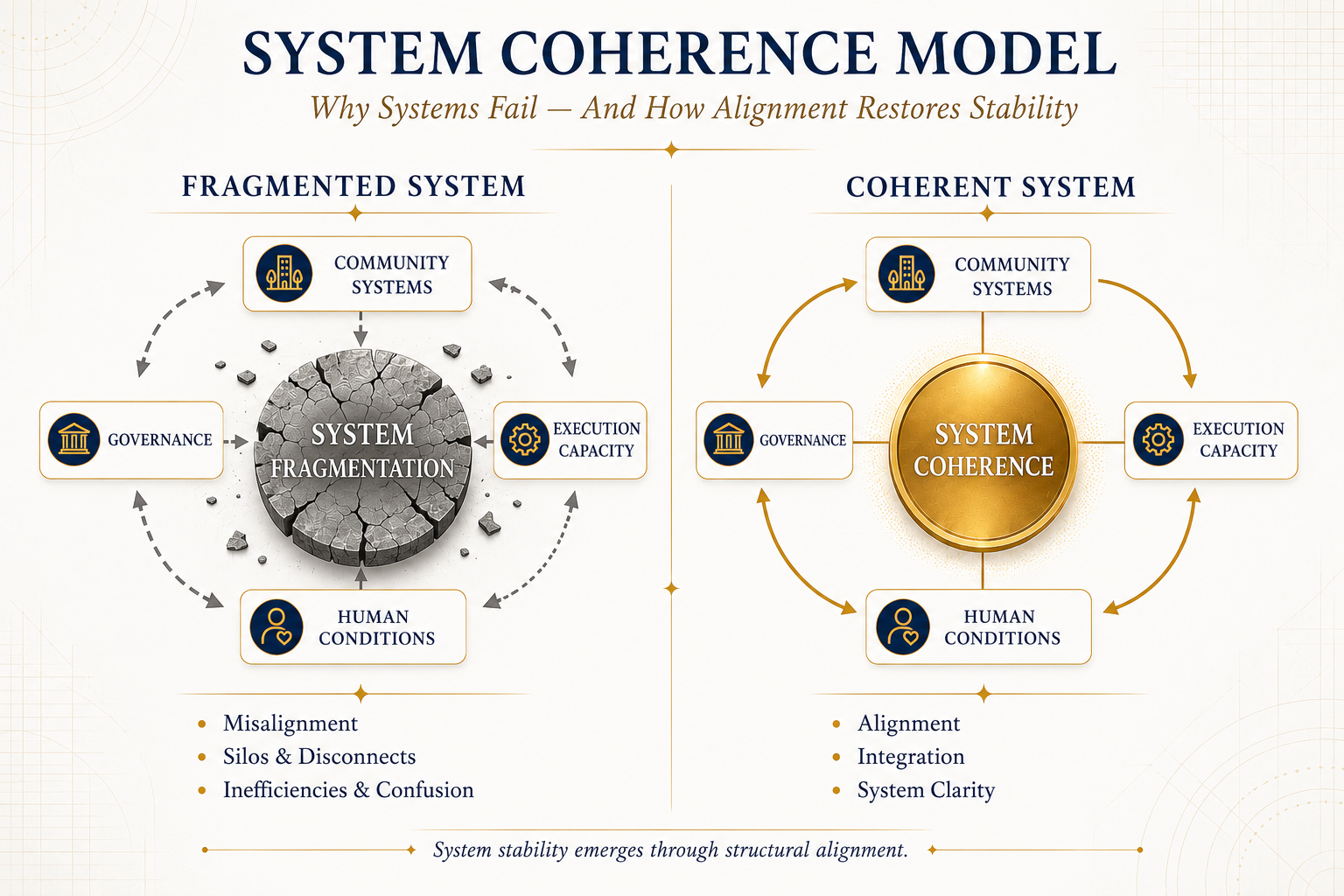
Coherence Index
Measures alignment across system structures
A diagnostic model for evaluating alignment across governance, execution, and environmental conditions within systems. This framework identifies fragmentation and provides a pathway toward system coherence.