Human-Centered Systems

The Architecture Behind Performance Across Systems

Every system produces exactly what it is designed to produce. Not what it intends. Not what it promises. Not what it measures. What it is designed to produce.

Across education, workforce, community, and governance systems, outcomes emerge from something deeper than effort— They emerge from the conditions those systems create and sustain.
“This is the foundation of the Institute’s work.”


Why Systems Fail

Systems do not fail suddenly. And they do not fail randomly. They fail gradually— as conditions begin to fracture across the layers that hold them together. Policies drift from practice. Execution separates from intent. Capacity stretches beyond what it can sustain. Human conditions deteriorate beneath the surface. And by the time outcomes collapse, the system has already been unstable for a long time.
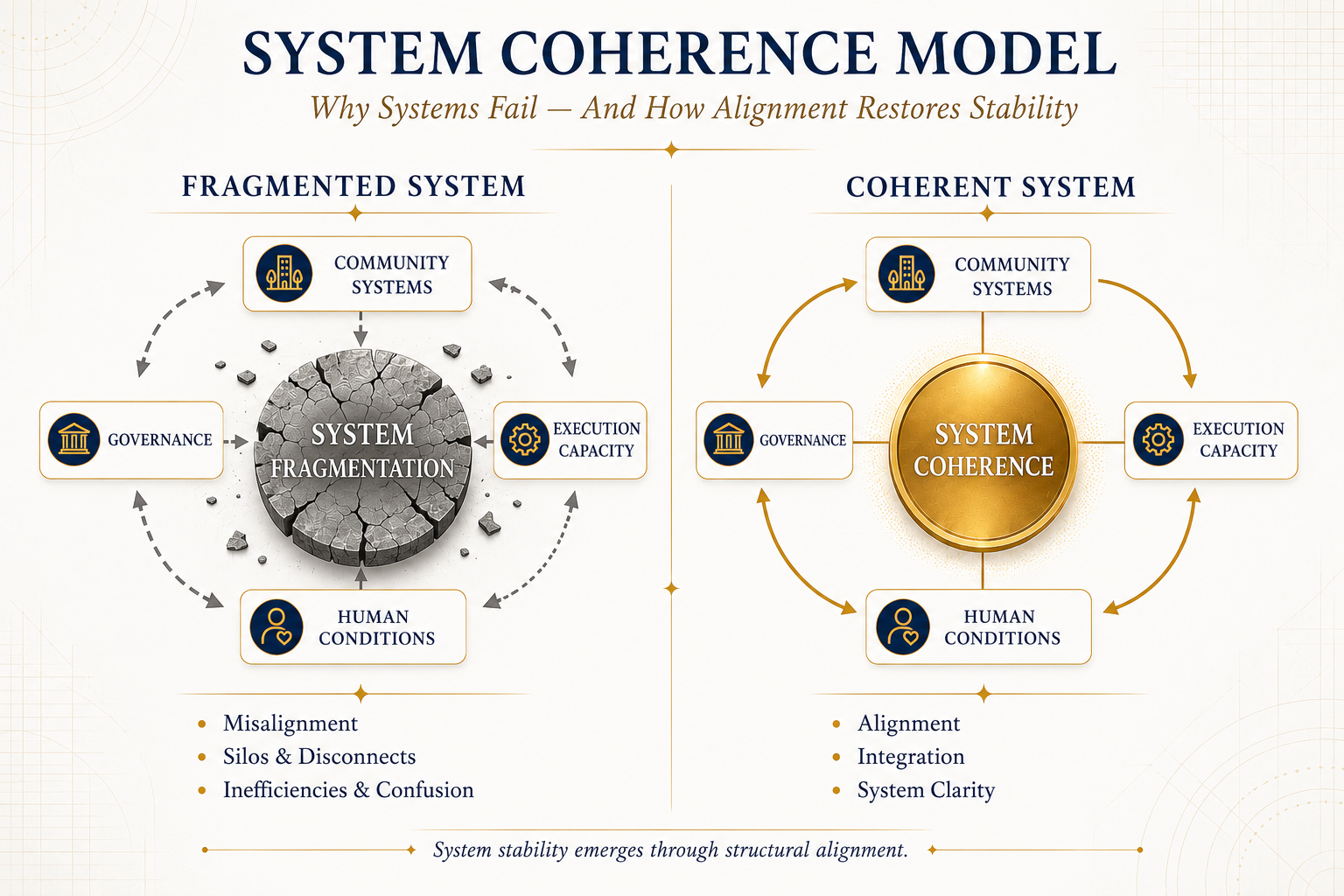
System Coherence Model
Fragmentation produces instability. Alignment produces stability.
“This is the difference between systems that hold and systems that unravel.”

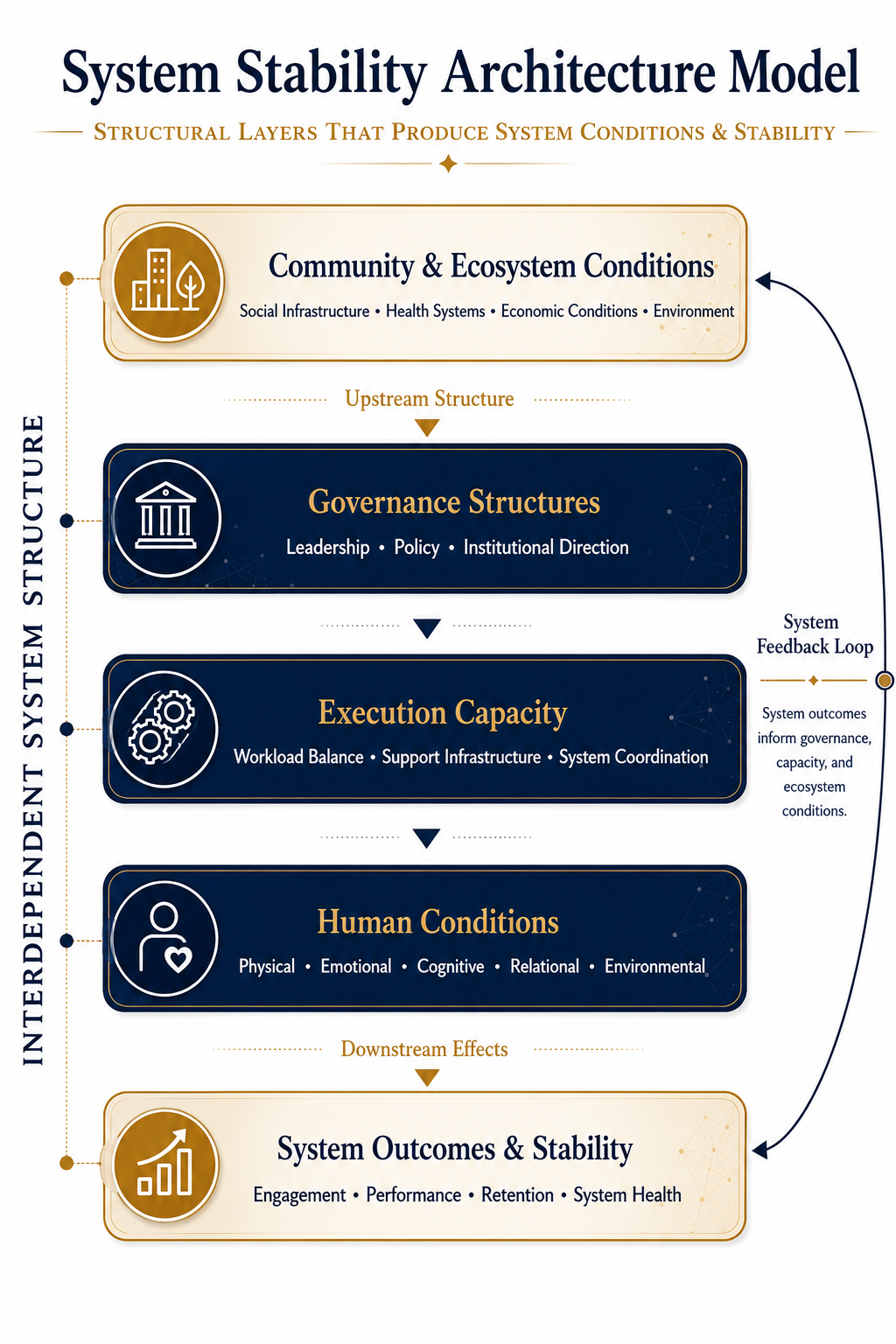
The Architecture of Human Systems

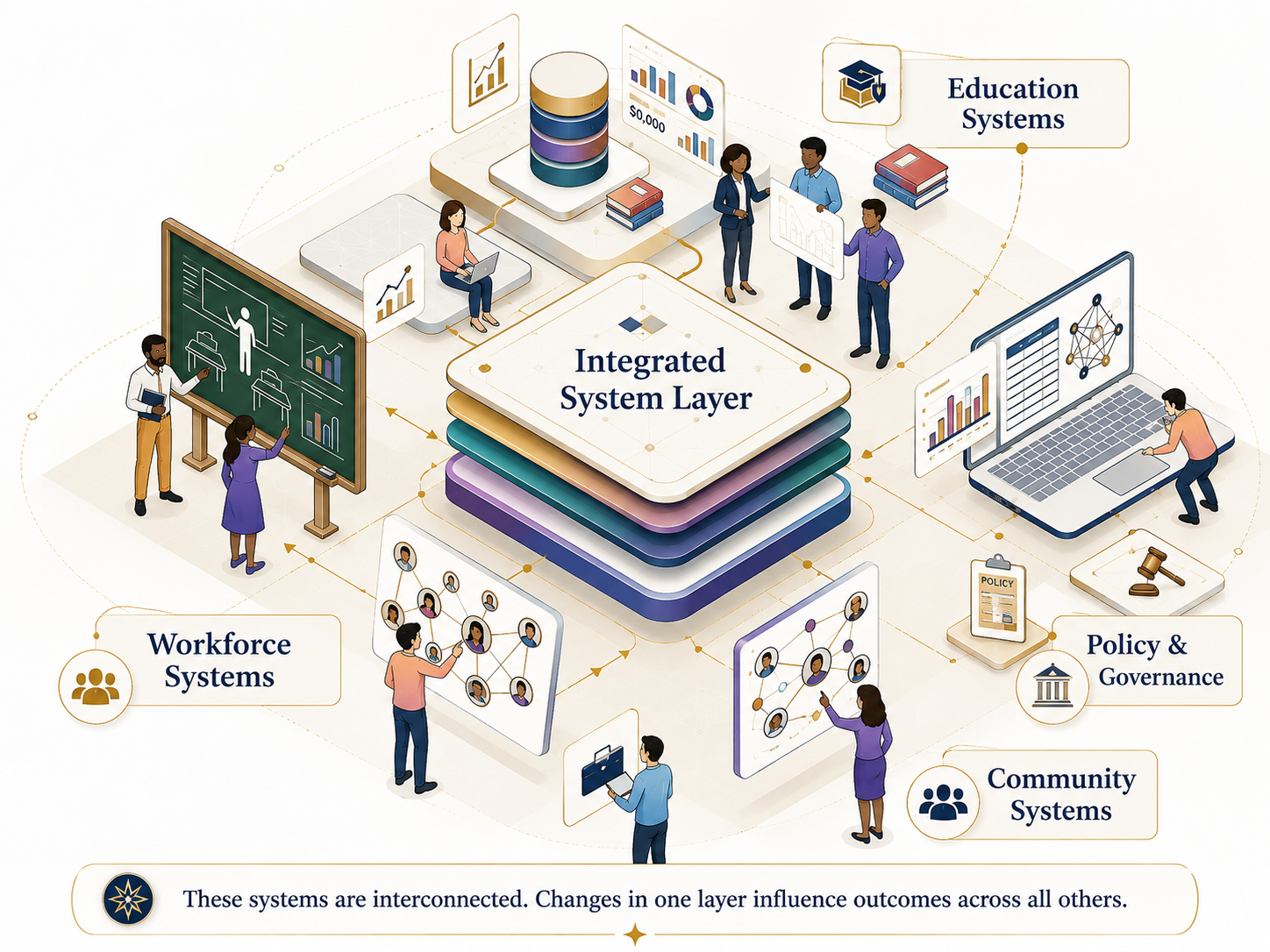
Every human-centered system—regardless of domain—operates through a structure. Not a visible one. Not one written in policy manuals or organizational charts. But a functional one. A living architecture shaped by how conditions move across layers.
That structure holds:
These are not independent parts. They are interdependent layers— each one shaping the next, each one carrying pressure downward. When they align, systems stabilize. When they fracture, instability spreads.
Outcomes are not created. They emerge from aligned conditions.

The Core Principle of System Design

Most systems are built around response. They react to breakdown. They intervene after failure.They measure what has already happened. But response does not create stability. Design does.
Systems produce what they are designed to produce.
“If instability is the outcome, then instability is being produced— structurally, consistently, predictably.”

From Conditions to Outcomes

We have spent decades trying to change behavior without changing the environments that produce it. We’ve asked for better performance from systems built on unstable foundations. But behavior is not the starting point. It is the result.
Conditions across systems regulate
how people respond
0 0
how systems function
0 0
how decisions are made
0 0
how outcomes unfold
0 0

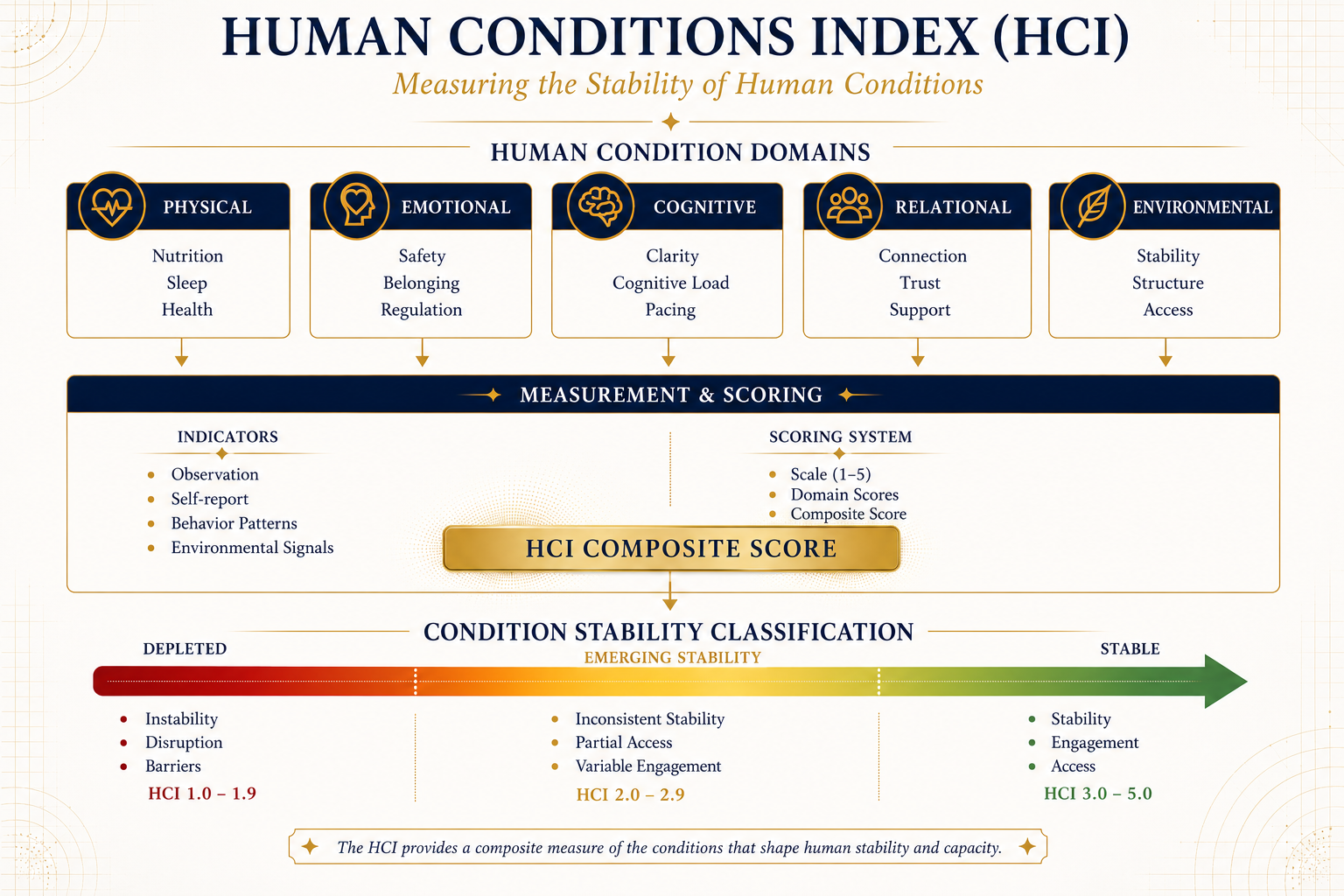
Measuring What Matters

Most systems measure outcomes.
Test scores. Arrests. Retention. Performance indicators. But those measurements come too late. They describe what already happened— not why it happened. To understand systems, you have to measure the system itself.
The Institute develops tools that do exactly that:
These are not performance metrics. They are diagnostic instruments.They reveal where instability exists before it becomes visible in outcomes.

Applications Across Systems

The structure does not change. Only the environment does.
The same system principles apply across:
Education
Systems
Workforce Systems
Community Systems
Policy & Governance

Different settings. Same architecture. 

Different outcomes — same underlying pattern.

We Cannot Continue to Repair Outcomes

Without redesigning the systems that produce them. Because systems do not improve when effort increases. They improve when design improves. If outcomes are unstable— the system is unstable.
And if the system is unstable— it must be redesigned.